Food
Ditya
Shifted a product-heavy bakery into a relatable, personality-driven brand people actually engaged with.
Timeline :
Oct 2024 – Oct 2025
Industry :
Food
Project Duration :
1 year
0K+
0K+
reach in 30 days
0%
0%
engagement rate
0K+
0K+
reach in 30 days
0%
0%
engagement rate
0K+
0K+
reach in 30 days
0%
0%
engagement rate
Context :
Ditya Bakehouse operates in a highly competitive F&B space where most brands look and behave the same.
The category is filled with product shots, close-ups, aesthetic visuals, and repetitive captions. Content that looks good, but rarely builds recall or interaction beyond people already following the page.
Ditya was no different at the start. The communication was heavily product-focused, visually similar to competitors, and did not give people a reason to engage.
Problem :
The brand lacked a clear identity in how it communicated.
Everything was centered around the product. What was being sold, how it looked, and what was available.
That approach has a ceiling.
People don’t engage deeply with product-heavy content unless they are already intending to buy. Which meant:
limited reach beyond existing followers
low shareability
weak recall
no distinct brand personality
The brand existed, but it didn’t stand out.
Insight :
People don’t share products.
They share things that feel familiar.
Moments, reactions, small everyday situations. Content where someone instantly relates and thinks, this is so me.
In a category where everyone is showing what they sell, the opportunity was to show how the brand fits into people’s lives.
Solution :
The shift was to move from product-led communication to personality-led content.
Instead of focusing only on what was being sold, the content began focusing on situations, humor, and relatable moments where the product naturally fit in.
Content became less about showcasing items and more about creating reactions. The tone became more conversational, slightly playful, and grounded in everyday experiences.
Adapting familiar formats to a bakery context
A big part of the system was identifying formats already working across the internet and translating them into the bakery’s world.
Not copying trends. Just understanding the structure and making it feel native to the brand.
One format played on exaggerated team expectations. Different members of the team confidently stated how much the bakery could produce in a day, each number getting more unrealistic. The final moment cut to the actual cake chef, grounding the situation.
Another format used a simple teasing dynamic. A customer tells their child that a popular item is unavailable. The staff subtly reveals it, then hides it again, turning a basic product into a playful moment.
These worked because people already understood the format. The relatability came from how it was adapted.
Another format used a simple teasing dynamic. A customer tells their child that a popular item is unavailable. The staff subtly reveals it, then hides it again, turning a basic product into a playful moment.
These worked because people already understood the format. The relatability came from how it was adapted.
Building simple, repeatable formats
Alongside this, we introduced a recurring series called “Ditya Asks.”
This focused on employees and the founder, keeping things light, conversational, and human.
Questions like:
If you could have one dessert for the rest of your life, what would it be
What are your favourite memories with Ditya
What are you eating this Diwali
What makes you happy
Nothing complex. Just consistent, easy to engage with.
It helped add a human layer to the brand and made the page feel less like a catalogue and more like something people could connect with.
Outcome :
In 30 days, the brand reached over 159K people with an engagement rate of around 90%.
Multiple pieces of content crossed into tens of thousands of views, expanding reach beyond the existing audience.
More importantly, the brand became more recognisable within its category.

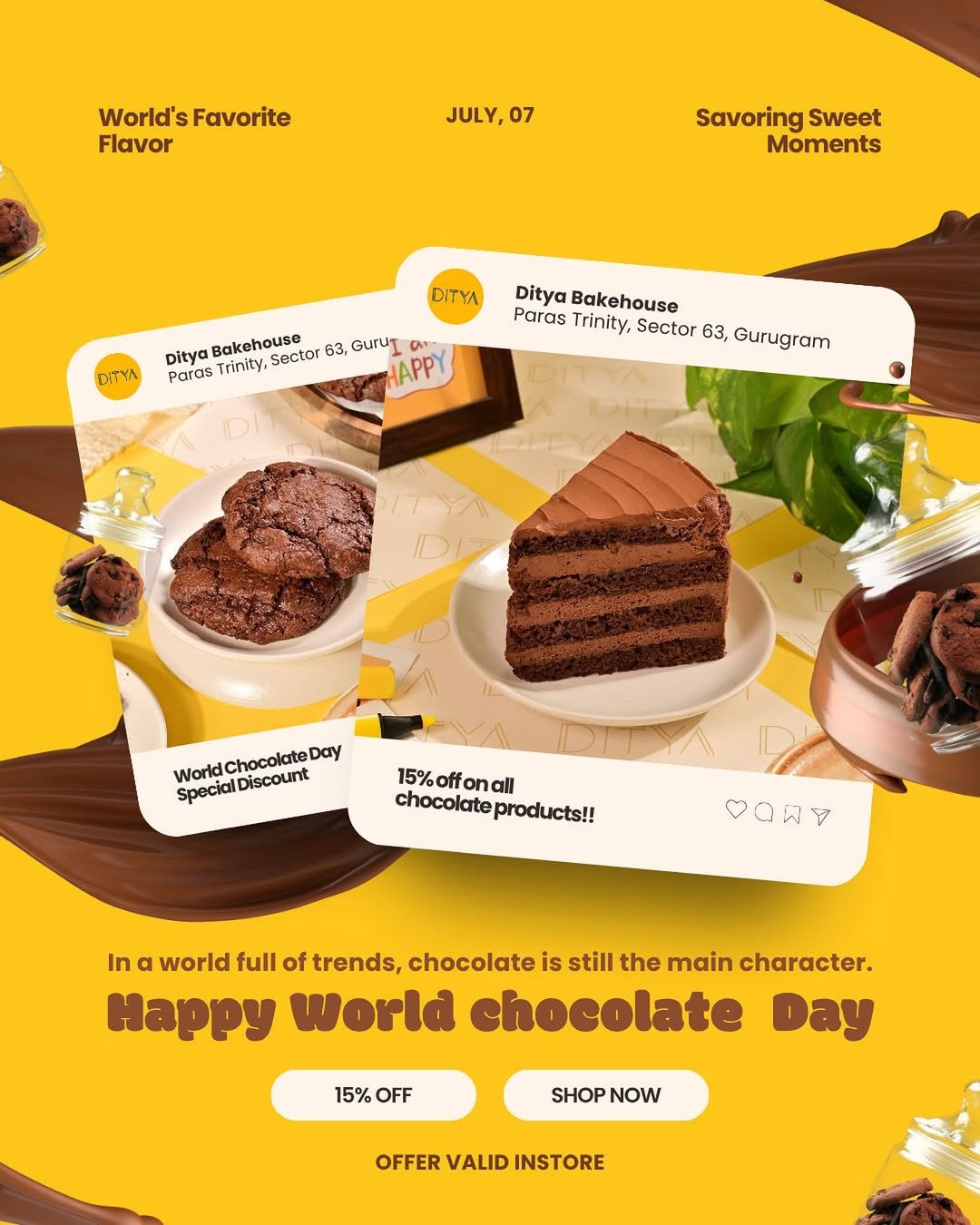
The product didn’t change.
The way it showed up did.
And that made people pay attention.
More Projects

Food
Ditya
Shifted a product-heavy bakery into a relatable, personality-driven brand people actually engaged with.
Timeline :
Oct 2024 – Oct 2025
Industry :
Food
Project Duration :
1 year
0K+
0K+
reach in 30 days
0%
0%
engagement rate
0K+
0K+
reach in 30 days
0%
0%
engagement rate
0K+
0K+
reach in 30 days
0%
0%
engagement rate
Context :
Ditya Bakehouse operates in a highly competitive F&B space where most brands look and behave the same.
The category is filled with product shots, close-ups, aesthetic visuals, and repetitive captions. Content that looks good, but rarely builds recall or interaction beyond people already following the page.
Ditya was no different at the start. The communication was heavily product-focused, visually similar to competitors, and did not give people a reason to engage.
Problem :
The brand lacked a clear identity in how it communicated.
Everything was centered around the product. What was being sold, how it looked, and what was available.
That approach has a ceiling.
People don’t engage deeply with product-heavy content unless they are already intending to buy. Which meant:
limited reach beyond existing followers
low shareability
weak recall
no distinct brand personality
The brand existed, but it didn’t stand out.
Insight :
People don’t share products.
They share things that feel familiar.
Moments, reactions, small everyday situations. Content where someone instantly relates and thinks, this is so me.
In a category where everyone is showing what they sell, the opportunity was to show how the brand fits into people’s lives.
Solution :
The shift was to move from product-led communication to personality-led content.
Instead of focusing only on what was being sold, the content began focusing on situations, humor, and relatable moments where the product naturally fit in.
Content became less about showcasing items and more about creating reactions. The tone became more conversational, slightly playful, and grounded in everyday experiences.
Adapting familiar formats to a bakery context
A big part of the system was identifying formats already working across the internet and translating them into the bakery’s world.
Not copying trends. Just understanding the structure and making it feel native to the brand.
One format played on exaggerated team expectations. Different members of the team confidently stated how much the bakery could produce in a day, each number getting more unrealistic. The final moment cut to the actual cake chef, grounding the situation.
Another format used a simple teasing dynamic. A customer tells their child that a popular item is unavailable. The staff subtly reveals it, then hides it again, turning a basic product into a playful moment.
These worked because people already understood the format. The relatability came from how it was adapted.
Another format used a simple teasing dynamic. A customer tells their child that a popular item is unavailable. The staff subtly reveals it, then hides it again, turning a basic product into a playful moment.
These worked because people already understood the format. The relatability came from how it was adapted.
Building simple, repeatable formats
Alongside this, we introduced a recurring series called “Ditya Asks.”
This focused on employees and the founder, keeping things light, conversational, and human.
Questions like:
If you could have one dessert for the rest of your life, what would it be
What are your favourite memories with Ditya
What are you eating this Diwali
What makes you happy
Nothing complex. Just consistent, easy to engage with.
It helped add a human layer to the brand and made the page feel less like a catalogue and more like something people could connect with.
Outcome :
In 30 days, the brand reached over 159K people with an engagement rate of around 90%.
Multiple pieces of content crossed into tens of thousands of views, expanding reach beyond the existing audience.
More importantly, the brand became more recognisable within its category.
The product didn’t change.
The way it showed up did.
And that made people pay attention.
More Projects
Food
Ditya
Shifted a product-heavy bakery into a relatable, personality-driven brand people actually engaged with.
Timeline :
Oct 2024 – Oct 2025
Industry :
Food
Project Duration :
1 year
0K+
0K+
reach in 30 days
0%
0%
engagement rate
0K+
0K+
reach in 30 days
0%
0%
engagement rate
0K+
0K+
reach in 30 days
0%
0%
engagement rate
Context :
Ditya Bakehouse operates in a highly competitive F&B space where most brands look and behave the same.
The category is filled with product shots, close-ups, aesthetic visuals, and repetitive captions. Content that looks good, but rarely builds recall or interaction beyond people already following the page.
Ditya was no different at the start. The communication was heavily product-focused, visually similar to competitors, and did not give people a reason to engage.
Problem :
The brand lacked a clear identity in how it communicated.
Everything was centered around the product. What was being sold, how it looked, and what was available.
That approach has a ceiling.
People don’t engage deeply with product-heavy content unless they are already intending to buy. Which meant:
limited reach beyond existing followers
low shareability
weak recall
no distinct brand personality
The brand existed, but it didn’t stand out.
Insight :
People don’t share products.
They share things that feel familiar.
Moments, reactions, small everyday situations. Content where someone instantly relates and thinks, this is so me.
In a category where everyone is showing what they sell, the opportunity was to show how the brand fits into people’s lives.
Solution :
The shift was to move from product-led communication to personality-led content.
Instead of focusing only on what was being sold, the content began focusing on situations, humor, and relatable moments where the product naturally fit in.
Content became less about showcasing items and more about creating reactions. The tone became more conversational, slightly playful, and grounded in everyday experiences.
Adapting familiar formats to a bakery context
A big part of the system was identifying formats already working across the internet and translating them into the bakery’s world.
Not copying trends. Just understanding the structure and making it feel native to the brand.
One format played on exaggerated team expectations. Different members of the team confidently stated how much the bakery could produce in a day, each number getting more unrealistic. The final moment cut to the actual cake chef, grounding the situation.
Another format used a simple teasing dynamic. A customer tells their child that a popular item is unavailable. The staff subtly reveals it, then hides it again, turning a basic product into a playful moment.
These worked because people already understood the format. The relatability came from how it was adapted.
Another format used a simple teasing dynamic. A customer tells their child that a popular item is unavailable. The staff subtly reveals it, then hides it again, turning a basic product into a playful moment.
These worked because people already understood the format. The relatability came from how it was adapted.
Building simple, repeatable formats
Alongside this, we introduced a recurring series called “Ditya Asks.”
This focused on employees and the founder, keeping things light, conversational, and human.
Questions like:
If you could have one dessert for the rest of your life, what would it be
What are your favourite memories with Ditya
What are you eating this Diwali
What makes you happy
Nothing complex. Just consistent, easy to engage with.
It helped add a human layer to the brand and made the page feel less like a catalogue and more like something people could connect with.
Outcome :
In 30 days, the brand reached over 159K people with an engagement rate of around 90%.
Multiple pieces of content crossed into tens of thousands of views, expanding reach beyond the existing audience.
More importantly, the brand became more recognisable within its category.