Community
Stories of Hope
Turned a community-led initiative into a structured, revenue-generating business through content systems, event formats, and performance-led communication.
Timeline :
Feb 2025 – Apr 2026
Industry :
Community
Project Duration :
14 months
0K+
0K+
reach in 90 days
0%+
0%+
engagement rate
0+
0+
participants across 100+ events
0K+
0K+
reach in 90 days
0+
0+
participants across 100+ events
0%+
0%+
engagement rate
0K+
0K+
reach in 90 days
0%+
0%+
engagement rate
0+
0+
participants across 100+ events
Context :
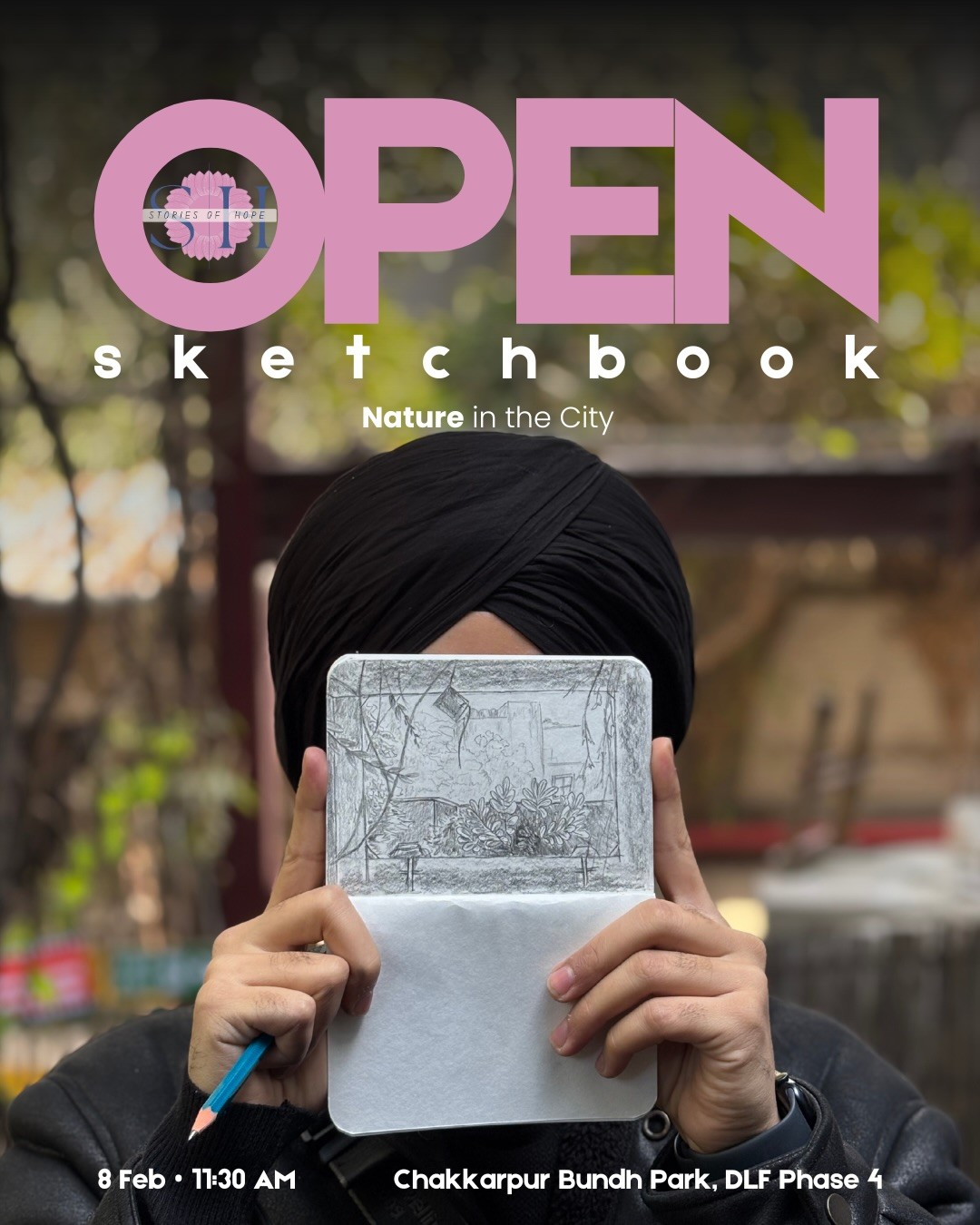
Stories of Hope is a Gurugram-based initiative built around slow, mindful experiences.
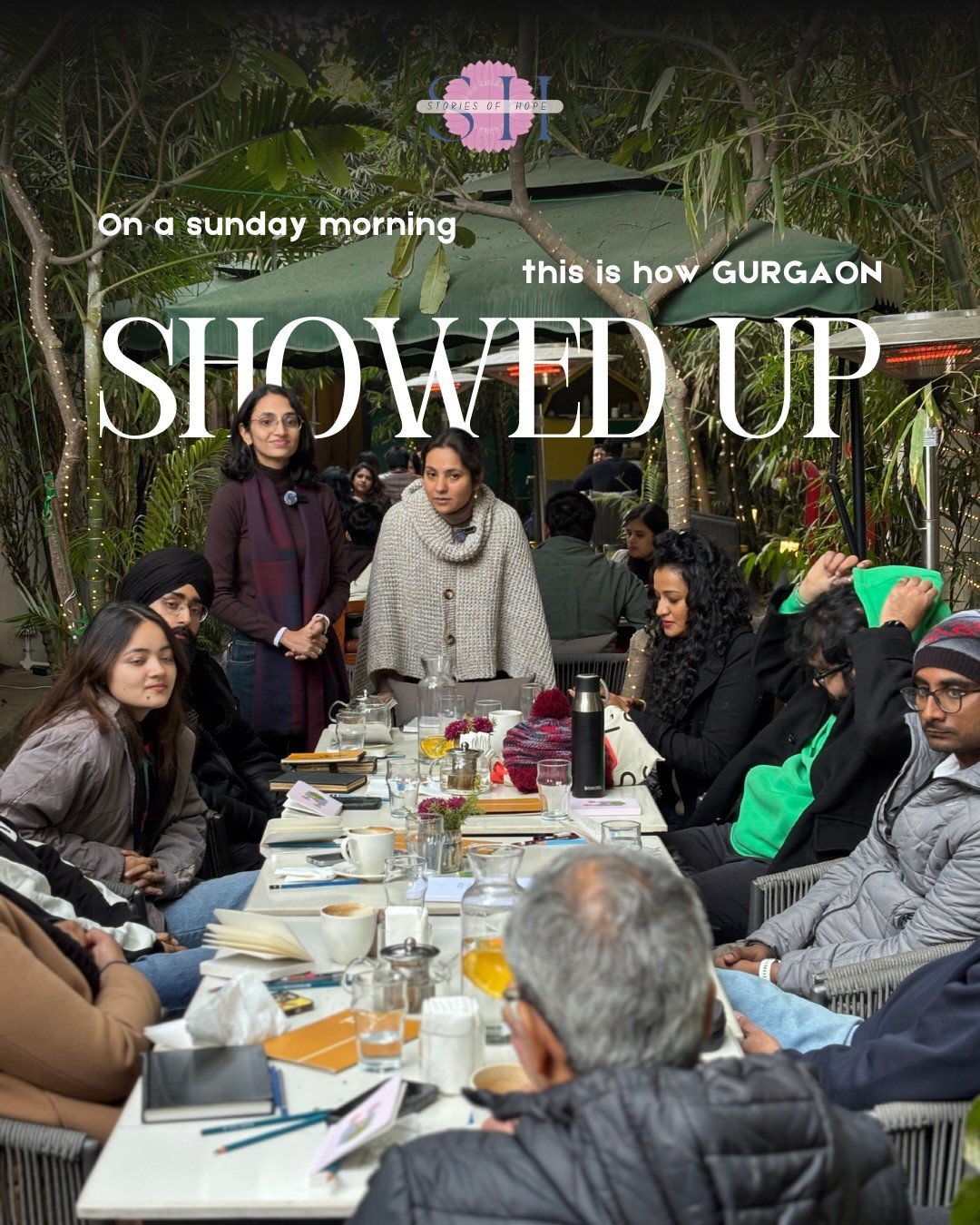
People who attended found real value in it, and most early growth came through word of mouth.
But that was not enough to scale.
The entire operation was being managed by the founder alone. Running events, coordinating people, and trying to manage content left very little room to experiment or build consistency.
What existed offline felt meaningful and clear. What showed up online did not reflect that.
Problem :
The issue was not lack of value. It was a lack of clarity.
Content was inconsistent and mostly reactive. It focused on documenting events instead of communicating what the space stood for.
Most posts were limited to group photos or basic creatives with dates and titles.
At the same time, there was no system in place. Content depended on available time, which meant no structured testing, no consistency, and no real scale.
Insight :
People were not coming for the format of the events.
They were coming for how the space made them feel.
Calm. Expression. Belonging.
But the content only showed what happened. It did not communicate why it mattered.
Solution :
1. Shifted the role of content
Static content was still used, but more intentionally for announcements, information, and structured posts.
Storytelling shifted to video.
I started building an archive of real event footage and used it to create edits that captured mood, interaction, and energy.
The goal was to make the experience feel real to someone who had never attended.
Built a video-led ad system
Earlier, events were promoted using separate static ads.
I moved this to a video-led approach using real footage that could promote multiple event formats together.
Each ad started with a strong hook and moved into real event footage with a voiceover about the event, followed by a clear CTA.
Anti-party hook
Opened with a drunk man stumbling
Voiceover
“Is this not your vibe?”
Cut to
“Let’s find your vibe, Gurgaon.”
Followed by event footage with a voiceover about the event and a CTA
This worked because not everyone relates to the typical party-heavy weekend culture in Gurgaon, and this spoke directly to people looking for a slower alternative.
Burnout / emotional connection hook
Shot during a live event
A participant looks into the camera and says
“No burnout. No hangover. Just us. Your seat is literally waiting for you.”
Cut to an empty chair with a note that says “You”
In another variation from a live event, a participant walks towards the camera and says
“Are you struggling to be heard and want to find like-minded people? You can join us here.”
As they say this, the camera pans into an ongoing event where people are sitting and talking
Followed by event footage with voiceover and CTA
This direction was aimed at people who feel burnt out during the week or are looking for more meaningful, human interaction over the weekend.
Social connection hook
Opening line
“Gurgaon can be a difficult place to make friends, and that’s why we created this.”
Followed by real interactions and CTA
This targeted people who were new to the city or looking for a more natural, low-pressure way to meet others.
Developed new event formats from observation
Cinema Circle came from a real moment.
During a book club, an author joined remotely and spoke to participants through a live video setup projected for the group.
That showed that people were open to shared viewing experiences.
We built on that and created Cinema Circle, starting with short films and later scaling to full-length screenings with discussions and quizzes.
Built content that drove discovery
We expanded beyond event promotion and made the page valuable on its own.
These are two such examples, among others.
Never Have I Ever
Light, relatable interactions with the founder that naturally led into specific event formats
Overthinkers Anonymous content
Worked with a clinical counselling psychologist
Created videos starting with relatable questions like
“When do I know if I’m actually hungry or just stress eating?”
Followed by a real answer and a soft CTA to join the session
Made the community visible in the content
A big shift was bringing participants into the content itself.
Instead of only showing events from a distance, we started involving people directly through:
– short, informal conversations during events
– quick feedback clips after sessions
– fun, low-pressure interactions where participants engaged with prompts or ideas
This made the content feel more real and less staged.
It also helped people see themselves in the space before attending.
Over time, participants were not just attending events, they were becoming part of the content journey as well.
Built a working system
Content created context
Ads drove discovery
Event formats created repeat participation
Hooks and creatives were iterated based on response, focusing on attracting people more likely to attend rather than just increasing reach.
Outcome :
196.8K reach in 90 days
90.8% engagement rate
Participation scaled from 2 to 3 people per session to 15 to 20
1000+ participants across 100+ events
The problem was not content volume.
It was communication.
Once people understood what the space offered, they chose to be part of it.
More Projects
Community
Stories of Hope
Turned a community-led initiative into a structured, revenue-generating business through content systems, event formats, and performance-led communication.
Timeline :
Feb 2025 – Apr 2026
Industry :
Community
Project Duration :
14 months
0K+
0K+
reach in 90 days
0%+
0%+
engagement rate
0+
0+
participants across 100+ events
0K+
0K+
reach in 90 days
0+
0+
participants across 100+ events
0%+
0%+
engagement rate
0K+
0K+
reach in 90 days
0%+
0%+
engagement rate
0+
0+
participants across 100+ events
Context :
Stories of Hope is a Gurugram-based initiative built around slow, mindful experiences.
People who attended found real value in it, and most early growth came through word of mouth.
But that was not enough to scale.
The entire operation was being managed by the founder alone. Running events, coordinating people, and trying to manage content left very little room to experiment or build consistency.
What existed offline felt meaningful and clear. What showed up online did not reflect that.
Problem :
The issue was not lack of value. It was a lack of clarity.
Content was inconsistent and mostly reactive. It focused on documenting events instead of communicating what the space stood for.
Most posts were limited to group photos or basic creatives with dates and titles.
At the same time, there was no system in place. Content depended on available time, which meant no structured testing, no consistency, and no real scale.
Insight :
People were not coming for the format of the events.
They were coming for how the space made them feel.
Calm. Expression. Belonging.
But the content only showed what happened. It did not communicate why it mattered.
Solution :
1. Shifted the role of content
Static content was still used, but more intentionally for announcements, information, and structured posts.
Storytelling shifted to video.
I started building an archive of real event footage and used it to create edits that captured mood, interaction, and energy.
The goal was to make the experience feel real to someone who had never attended.
Built a video-led ad system
Earlier, events were promoted using separate static ads.
I moved this to a video-led approach using real footage that could promote multiple event formats together.
Each ad started with a strong hook and moved into real event footage with a voiceover about the event, followed by a clear CTA.
Anti-party hook
Opened with a drunk man stumbling
Voiceover
“Is this not your vibe?”
Cut to
“Let’s find your vibe, Gurgaon.”
Followed by event footage with a voiceover about the event and a CTA
This worked because not everyone relates to the typical party-heavy weekend culture in Gurgaon, and this spoke directly to people looking for a slower alternative.
Burnout / emotional connection hook
Shot during a live event
A participant looks into the camera and says
“No burnout. No hangover. Just us. Your seat is literally waiting for you.”
Cut to an empty chair with a note that says “You”
In another variation from a live event, a participant walks towards the camera and says
“Are you struggling to be heard and want to find like-minded people? You can join us here.”
As they say this, the camera pans into an ongoing event where people are sitting and talking
Followed by event footage with voiceover and CTA
This direction was aimed at people who feel burnt out during the week or are looking for more meaningful, human interaction over the weekend.
Social connection hook
Opening line
“Gurgaon can be a difficult place to make friends, and that’s why we created this.”
Followed by real interactions and CTA
This targeted people who were new to the city or looking for a more natural, low-pressure way to meet others.
Developed new event formats from observation
Cinema Circle came from a real moment.
During a book club, an author joined remotely and spoke to participants through a live video setup projected for the group.
That showed that people were open to shared viewing experiences.
We built on that and created Cinema Circle, starting with short films and later scaling to full-length screenings with discussions and quizzes.
Built content that drove discovery
We expanded beyond event promotion and made the page valuable on its own.
These are two such examples, among others.
Never Have I Ever
Light, relatable interactions with the founder that naturally led into specific event formats
Overthinkers Anonymous content
Worked with a clinical counselling psychologist
Created videos starting with relatable questions like
“When do I know if I’m actually hungry or just stress eating?”
Followed by a real answer and a soft CTA to join the session
Made the community visible in the content
A big shift was bringing participants into the content itself.
Instead of only showing events from a distance, we started involving people directly through:
– short, informal conversations during events
– quick feedback clips after sessions
– fun, low-pressure interactions where participants engaged with prompts or ideas
This made the content feel more real and less staged.
It also helped people see themselves in the space before attending.
Over time, participants were not just attending events, they were becoming part of the content journey as well.
Built a working system
Content created context
Ads drove discovery
Event formats created repeat participation
Hooks and creatives were iterated based on response, focusing on attracting people more likely to attend rather than just increasing reach.
Outcome :
196.8K reach in 90 days
90.8% engagement rate
Participation scaled from 2 to 3 people per session to 15 to 20
1000+ participants across 100+ events
The problem was not content volume.
It was communication.
Once people understood what the space offered, they chose to be part of it.
More Projects
Community
Stories of Hope
Turned a community-led initiative into a structured, revenue-generating business through content systems, event formats, and performance-led communication.
Timeline :
Feb 2025 – Apr 2026
Industry :
Community
Project Duration :
14 months
0K+
0K+
reach in 90 days
0%+
0%+
engagement rate
0+
0+
participants across 100+ events
0K+
0K+
reach in 90 days
0+
0+
participants across 100+ events
0%+
0%+
engagement rate
0K+
0K+
reach in 90 days
0%+
0%+
engagement rate
0+
0+
participants across 100+ events
Context :
Stories of Hope is a Gurugram-based initiative built around slow, mindful experiences.
People who attended found real value in it, and most early growth came through word of mouth.
But that was not enough to scale.
The entire operation was being managed by the founder alone. Running events, coordinating people, and trying to manage content left very little room to experiment or build consistency.
What existed offline felt meaningful and clear. What showed up online did not reflect that.
Problem :
The issue was not lack of value. It was a lack of clarity.
Content was inconsistent and mostly reactive. It focused on documenting events instead of communicating what the space stood for.
Most posts were limited to group photos or basic creatives with dates and titles.
At the same time, there was no system in place. Content depended on available time, which meant no structured testing, no consistency, and no real scale.
Insight :
People were not coming for the format of the events.
They were coming for how the space made them feel.
Calm. Expression. Belonging.
But the content only showed what happened. It did not communicate why it mattered.
Solution :
1. Shifted the role of content
Static content was still used, but more intentionally for announcements, information, and structured posts.
Storytelling shifted to video.
I started building an archive of real event footage and used it to create edits that captured mood, interaction, and energy.
The goal was to make the experience feel real to someone who had never attended.
Built a video-led ad system
Earlier, events were promoted using separate static ads.
I moved this to a video-led approach using real footage that could promote multiple event formats together.
Each ad started with a strong hook and moved into real event footage with a voiceover about the event, followed by a clear CTA.
Anti-party hook
Opened with a drunk man stumbling
Voiceover
“Is this not your vibe?”
Cut to
“Let’s find your vibe, Gurgaon.”
Followed by event footage with a voiceover about the event and a CTA
This worked because not everyone relates to the typical party-heavy weekend culture in Gurgaon, and this spoke directly to people looking for a slower alternative.
Burnout / emotional connection hook
Shot during a live event
A participant looks into the camera and says
“No burnout. No hangover. Just us. Your seat is literally waiting for you.”
Cut to an empty chair with a note that says “You”
In another variation from a live event, a participant walks towards the camera and says
“Are you struggling to be heard and want to find like-minded people? You can join us here.”
As they say this, the camera pans into an ongoing event where people are sitting and talking
Followed by event footage with voiceover and CTA
This direction was aimed at people who feel burnt out during the week or are looking for more meaningful, human interaction over the weekend.
Social connection hook
Opening line
“Gurgaon can be a difficult place to make friends, and that’s why we created this.”
Followed by real interactions and CTA
This targeted people who were new to the city or looking for a more natural, low-pressure way to meet others.
Developed new event formats from observation
Cinema Circle came from a real moment.
During a book club, an author joined remotely and spoke to participants through a live video setup projected for the group.
That showed that people were open to shared viewing experiences.
We built on that and created Cinema Circle, starting with short films and later scaling to full-length screenings with discussions and quizzes.
Built content that drove discovery
We expanded beyond event promotion and made the page valuable on its own.
These are two such examples, among others.
Never Have I Ever
Light, relatable interactions with the founder that naturally led into specific event formats
Overthinkers Anonymous content
Worked with a clinical counselling psychologist
Created videos starting with relatable questions like
“When do I know if I’m actually hungry or just stress eating?”
Followed by a real answer and a soft CTA to join the session
Made the community visible in the content
A big shift was bringing participants into the content itself.
Instead of only showing events from a distance, we started involving people directly through:
– short, informal conversations during events
– quick feedback clips after sessions
– fun, low-pressure interactions where participants engaged with prompts or ideas
This made the content feel more real and less staged.
It also helped people see themselves in the space before attending.
Over time, participants were not just attending events, they were becoming part of the content journey as well.
Built a working system
Content created context
Ads drove discovery
Event formats created repeat participation
Hooks and creatives were iterated based on response, focusing on attracting people more likely to attend rather than just increasing reach.
Outcome :
196.8K reach in 90 days
90.8% engagement rate
Participation scaled from 2 to 3 people per session to 15 to 20
1000+ participants across 100+ events